When Science Meets Conscience: An Entomologist’s Moral Choices
1. Two moments that changed my life
1.1. Standing up for my assignment
In 1974, fresh out of university and eager to make a difference, I received an offer that would shape the rest of my career. The Directorate-General for Development Cooperation (DGIS) of the Dutch Ministry of Foreign Affairs had selected me as an Associate Expert for an FAO/UNDP project in Nicaragua.
The assignment sounded exciting. The project had begun as a program to help cotton farmers manage devastating insect pests but had recently expanded to include maize, sorghum, and beans. My role would be to develop Integrated Pest Management (IPM) strategies for maize and sorghum—an area I had already started preparing for with great enthusiasm.
But there was one question I could not ignore.
Nicaragua was ruled by the Somoza dictatorship, a regime notorious for repression and corruption. Was it morally right to work in such a country?
I wrestled with that question for days before deciding to seek advice from someone I deeply respected: Professor Gerrit Jan Huizer of the Catholic University Nijmegen (now Radboud University). He had spent decades working with peasant communities across Latin America and Asia and knew the realities of development work better than almost anyone. I met him briefly at a symposium on land reform in Wageningen, and I knew he had once begun his own international career as an associate expert in Central America.
When I called him and explained my doubts, he didn’t hesitate.
“Go,” he said. “It will be an excellent learning experience.”
His certainty convinced me. Sometimes a single sentence from someone you trust is enough to change your life.
Before leaving for Nicaragua, I contacted the Dutch FAO expert already working on the project, Dr. Marinus Jan “Rinus” Sommeijer. We discussed how the work would be divided. He would focus on beans, the project leader would oversee cotton, and I would take responsibility for maize and sorghum. I immersed myself in scientific papers, photocopying articles and studying everything I could find on IPM for these crops. I arrived in Nicaragua eager to begin.
Instead, I received an unexpected surprise.
The project leader informed me that, for the next two months, I would be weighing dried pieces of cotton plants. He was developing a growth model for cotton and needed someone to do the measurements.
I was stunned.
This was not why I had come halfway around the world. I had been recruited for independent work on maize and sorghum, not to spend weeks acting as a laboratory assistant.
That night I hardly slept. I kept turning the problem over in my mind. Should I simply accept the situation? After all, I was the youngest member of the team. Or should I stand up for what I believed was right?
By morning I had made my decision.
The Dutch senior expert assured me that he would support me if things went badly. Even so, walking into the project leader’s office felt like carrying lead in my shoes.
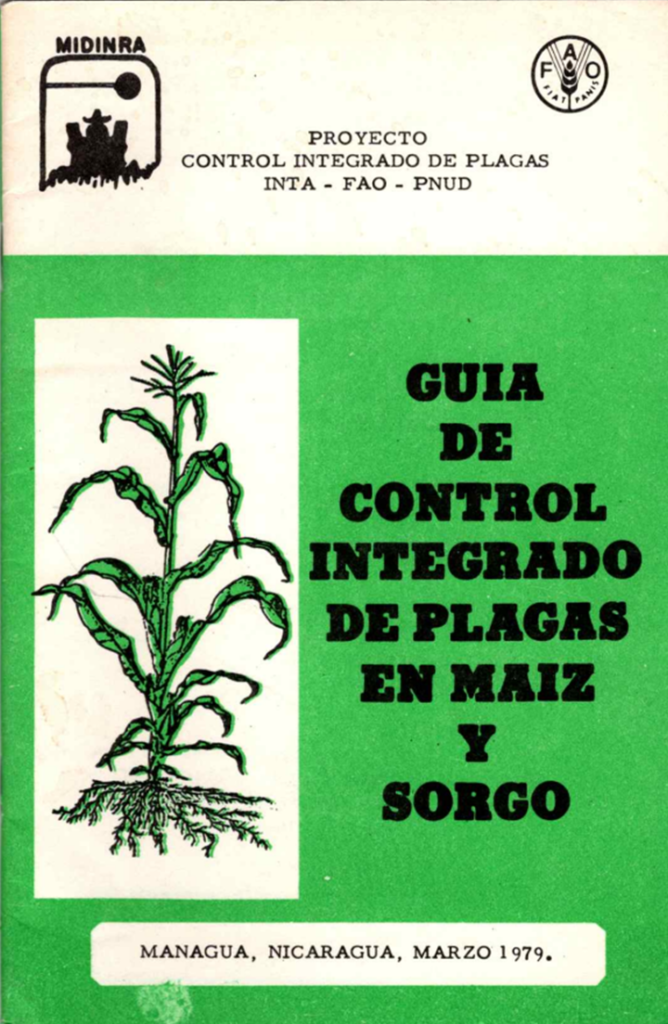
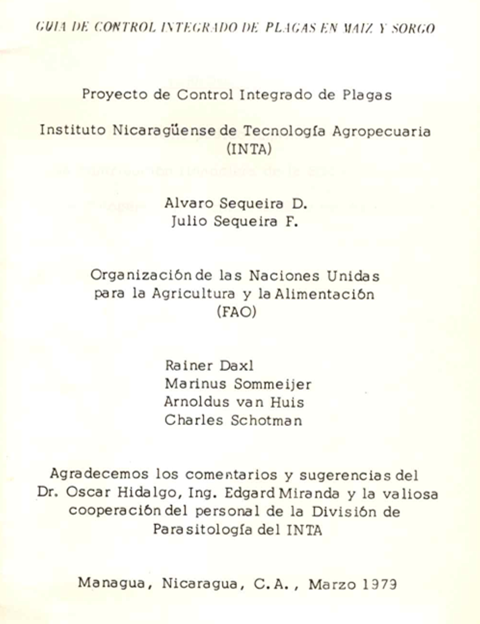
I explained calmly that weighing cotton plants was not the purpose of the Associate Expert programme. If necessary, I said, I would have to report the situation to the Dutch Ministry. I reminded him that I thought that I was recruited specifically to develop IPM for maize and sorghum and had prepared extensively for that assignment (Fig. M1).
Then I waited.
To my enormous relief, he agreed immediately.
Just like that, the problem disappeared.
The weight I had carried into his office seemed to vanish from my shoulders. From that day onward, I devoted myself wholeheartedly to the work, and the following years became some of the most rewarding of my professional life.
1.2. Challenging Bureaucracy
When Rinus Sommeijer left Nicaragua in 1976, I faced a choice. As an Associate Expert, I held a United Nations P-1 position. I could either stay and take over his responsibilities or accept a different assignment elsewhere.
For me, the answer was obvious. By then I was already functioning independently, with full responsibility for IPM in maize and sorghum. If I stayed, I wanted to continue not as an Associate Expert but as a fully appointed FAO expert.
There was just one problem.
UN rules did not allow a direct promotion from a P-1 to a P-3 position.
The bureaucracy said it could not be done.
I replied that, in that case, I would rather leave and accept another assignment elsewhere.
Apparently, FAO wanted me to stay. After considerable discussion behind the scenes, a solution was found. I was promoted first to P-2 for two months and then to P-3, satisfying the administrative requirements while allowing me to continue the work.
The episode became something of a legend inside FAO. Years later, when I visited headquarters in Rome, people would ask, smiling, “Are you the person who…?” They already knew the story.
Looking back, those two moments taught me lessons that stayed with me throughout my career.
The first taught me not to accept work that ignored the purpose of my appointment or wasted the opportunity I had been given. The second taught me not to let bureaucracy stand in the way of fairness or common sense.
Neither confrontation came easily. In both cases I was nervous. In both cases I risked hearing “no.”
But I also learned something invaluable: if you have prepared well, have done your job, and know your case is just, do not be afraid to speak up.
Standing your ground is rarely comfortable.
Sometimes, however, it changes the course of your life.
2. The secret report I never published
In science, we like to believe that facts always win. We tell ourselves that evidence speaks for itself and that, in the end, the truth prevails.
My first encounter with reality taught me otherwise.
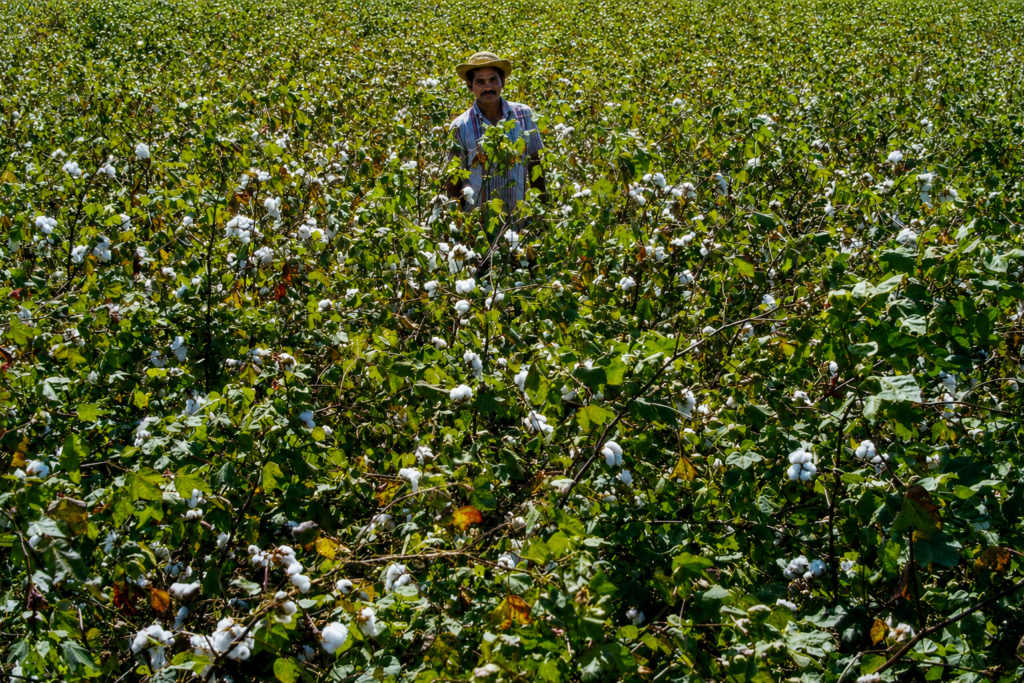
In the 1970s, Nicaragua became famous in agricultural circles for what was hailed as a remarkable success story. Farmers growing cotton had supposedly embraced Integrated Pest Management (IPM)—an approach that relies less on pesticides and more on understanding nature. Instead of spraying at the first sign of an insect, farmers learned to protect beneficial insects that naturally keep pests under control (Fig. M2).
The Nicaraguan experience became a shining example for the world. It was cited in influential publications and helped inspire the launch of FAO’s Global Programme on Integrated Pest Management.
Two giants in the field stood behind these publications.
One was Ray F. Smith, widely regarded as the father of modern IPM. His work transformed pest management around the world, and in 1997 he received the World Food Prize for his achievements.
The other was Lukas Brader, who headed the Plant Protection Division of the Food and Agriculture Organization in Rome. He devoted his life to promoting better pest management in developing countries.
Both men were highly respected. My friend, the late Dr. Kees Eveleens, who worked on an IPM cotton project in Sudan, always spoke of them with admiration after they visited the project as members of FAO’s Panel of Experts.
I admired them too.
At the time, I was a young entomologist working for FAO in Nicaragua. My assignment focused on maize and sorghum rather than cotton. But before leaving the country, curiosity got the better of me.
How successful had the famous Nicaraguan cotton programme really been?
I spent several weeks in the library of Nicaragua’s National Bank, the institution from which the national IPM programme had been coordinated. As an FAO expert, I was granted access to reports, statistics and internal documents that few people ever examined in detail.
The deeper I looked, the more uneasy I became.
The evidence did not seem to support the celebrated success story.
The share of production costs spent on insecticides had not shown a clear downward trend between 1961 and 1976. The average number of insecticide applications during the supposed IPM era had not fallen either. And only about 20 percent of Nicaragua’s cotton acreage was actually managed under the IPM programme, making it difficult for any local successes to be reflected in national statistics.
This was not what I had expected to find.
Yet my investigation also convinced me of something else.
The programme itself contained genuinely good ideas.
One of its key recommendations was to delay the first insecticide spray of the season. This was scientifically sound. Early spraying kills not only pests but also their natural enemies. Once these beneficial insects disappear, pest populations often rebound, forcing farmers into repeated pesticide applications. Delaying that first spray can help nature keep pests in check.
So, the concept was right.
The evidence for its spectacular national success was far less convincing.
I wrote everything down.
But I did not include the report in my official FAO final report.
Instead, I placed it in an annex that I deliberately never attached.
It became, in effect, my secret report.
I was young, at the very beginning of my career. The implications of my findings worried me. The Nicaraguan experience had become the flagship example used to promote IPM worldwide. Distinguished scientists had published papers praising its success. Challenging that narrative would have had consequences—not only for the programme, but perhaps also for my own future.
When I travelled to FAO headquarters in Rome in 1979 for my close-out visit, I handed the annex personally to Lukas Brader.
The next day he came to see me.
“You son of a bitch,” he said.
It was not an insult.
It was the spontaneous reaction of someone who had just read something deeply unsettling.
He advised me not to publish the report.
“It will hurt your career.”
I followed his advice.
To this day, I do not know whether that was the right decision.
Nor do I know whether the earlier authors had deliberately exaggerated the evidence. I have never believed they acted in bad faith. More likely, they relied on the data and interpretations available to them at the time. Scientific understanding evolves, and hindsight often reveals weaknesses that were not obvious before.
But the experience left a lasting mark on me.
Science is carried out by human beings. We all become attached to ideas, to successful projects and sometimes to narratives that inspire others. Once a success story gains momentum, questioning it becomes increasingly difficult—even when the evidence deserves a closer look.
Looking back after nearly half a century, I still wonder what I should have done.
Should a young scientist challenge an accepted story when the evidence points in another direction?
Or should he remain silent because the broader cause is worthwhile?
I still do not have a definitive answer.
What I do know is that honesty and evidence are the foundations of science. Without the willingness to question even our most cherished success stories, science risks becoming advocacy.
Today, we have a word for presenting an overly optimistic picture while overlooking inconvenient facts: greenwashing.
Whether my experience in Nicaragua fits that description is for others to judge.
But the secret report I never published has stayed with me for the rest of my life.
5. The tsetse challenge
5.1. Learning by doing
In 1985, the Directorate-General for International Cooperation of the Dutch Ministry of Foreign Affairs asked me to join a mission to review a Dutch-funded tsetse control programme in southern Kenya. Although I was an entomologist, I knew almost nothing about tsetse flies or the diseases they transmit. Should I accept the mission or admit that I was not a specialist in this field?
Tsetse flies are large biting flies that inhabit much of tropical Africa. The genus is Glossina (Fig. M3). The fly feeds on the blood of vertebrate animals. They are biological vectors of trypanosomes, causing human trypanosomiasis (sleeping sickness) and animal trypanosomiasis (nagana).
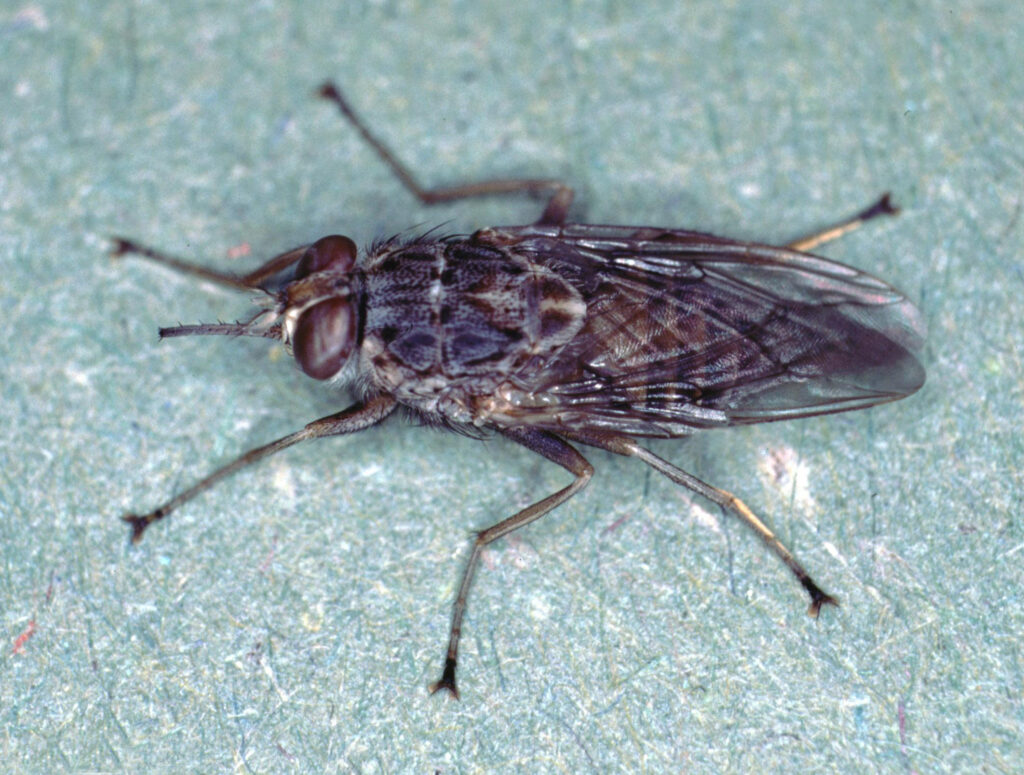
Fig. M3. The tsetse fly Glossina morsitans.
At that time Dr. Lucas Brader visited me in Wageningen. He was the Director of the Plant Production and Protection Division (AGP) of the Food and Agriculture Organization of the United Nations. I thought it may be appropriate to ask his advice. He smiled and said, “You have no idea how many meetings I attend on subjects I know almost nothing about. You learn by doing. Accept it.”
I took his advice and accepted the mission. I studied a lot of literature about tsetse flies before going on this mission. The two weeks in Kenya gave me practical experience on how to manage tsetse.
Back in the Netherlands I started to incorporate tsetse in my lecture entitled “Integrated pest & vector management”. Experts on vector management told me afterwards that my lecture notes on tsetse were excellent.
The experience taught me that, with enough dedication, you can acquire a surprising level of expertise in a field within just a few weeks.
5.2. When science meet politics
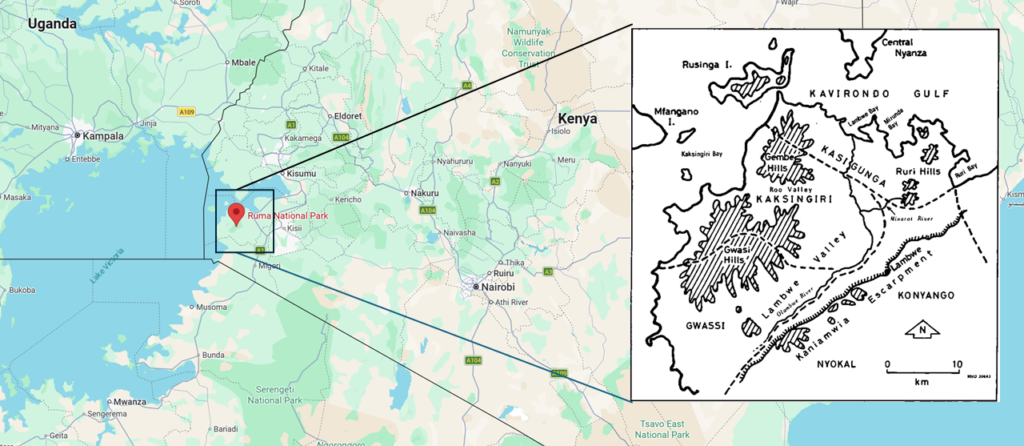
During our briefing at the Ministry before leaving for Kenya, someone casually asked whether, if time permitted, we could also assess a proposal from the International Atomic Energy Agency (IAEA). The proposal was to use the sterile insect technique (SIT) to eradicate tsetse flies in the Lambwe valley. Lambwe Valley is in the west of Kenya, bordering Lake Victoria and famous for containing Ruma National Park (Fig. M4). The valley is a hot, humid tropical woodland. In the early 20th century, the valley saw massive human population shifts due to heavy infestations of tsetse flies.
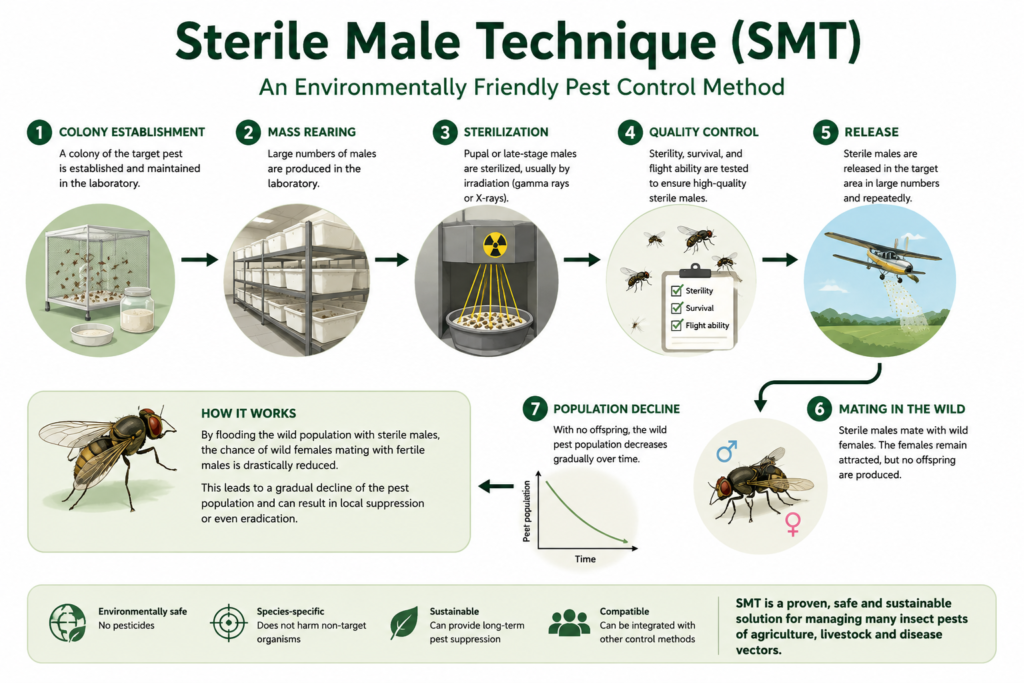
The proposal involved the Sterile Insect Technique (SIT). Male tsetse flies are reared in large numbers and sterilized with low doses of radiation before being released into the wild. Female tsetse flies normally mate only once in their lifetime. If they mate with a sterile male, they produce no offspring (Fig. M5). When combined with other control measures that first reduce the fly population, SIT can eliminate isolated populations. It was successfully used, for example, on the island of Zanzibar.
At the Ministry’s request, we assessed the proposal at the end of our mission. We concluded that the programme was unlikely to succeed. We listed around ten reasons, the most important being that the Lambwe Valley population was not isolated. Tsetse flies could continually reinvade from surrounding areas. Zanzibar, by contrast, is an island, making reinvasion impossible.
When back in the Netherlands, we were invited to the Ministry for the debriefing. I was expecting a discussion with a few people from the Ministry, so I was casually dressed. Instead, we walked into a room filled with about thirty senior officials, all dressed in dark suits and ties. We looked at each other in amazement. What was going on? The only thing they were interested in was to discuss our findings on the SIT programme in Lambwe valley. We explained why we were opposed using the arguments we had provided.
Only afterwards did we learn why the meeting had attracted so much attention. A very senior Dutch official had apparently given the President of Kenya the impression that the Netherlands would finance the programme. Our scientific assessment had unexpectedly become a political issue.
In the end, the project was never funded. On that occasion, scientific evidence prevailed over political promises.
6. The power line that no one wanted
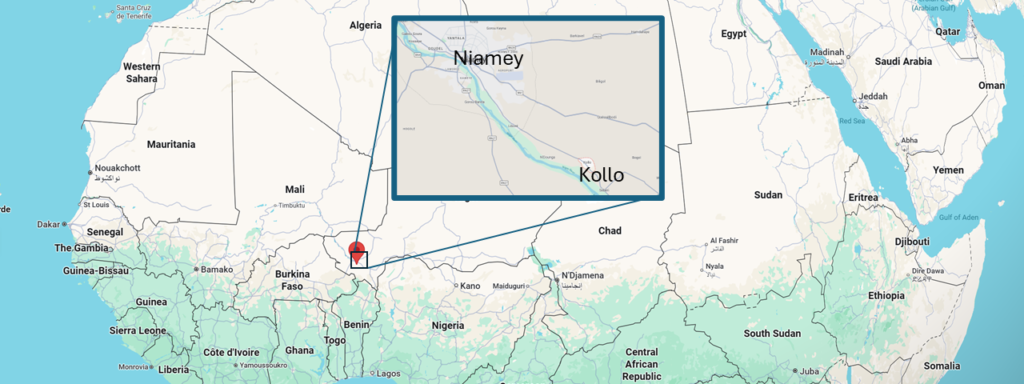
From 1982 to 1985, I worked in Niger, responsible for a Sahelian training programme on crop protection at the Institut Pratique de Développement Rural (IPDR) in Kolo, about 30 kilometres southeast of the capital, Niamey (Fig. M6).
One day, word came that a high official from a Dutch Ministry was planning to visit Niger. The obvious question arose: what meaningful gift could the Netherlands offer?
People began discussing possibilities. Buildings? Equipment? Vehicles? None of these seemed quite right.
As I looked around the campus, something caught my attention.
The institute generated all its own electricity using large diesel generators. They ran day and night, consuming enormous quantities of fuel. It was expensive, noisy, and hardly an efficient way to power a school.
Then I noticed something else.
Only a short distance away ran high-voltage power lines. The national electricity grid was practically on the institute’s doorstep.
Why not simply connect the school to the grid?
Compared with running giant generators, it seemed an obvious improvement. It would reduce fuel consumption, simplify maintenance, and provide a more reliable source of electricity. It struck me as the kind of practical investment that development cooperation should support—solving a problem permanently instead of treating its symptoms.
I enthusiastically presented the idea to the institute’s management.
Their response surprised me.
They were not enthusiastic at all.
Gradually I understood why.
The diesel fuel for the generators was financed by the World Bank. The institute itself did not pay for it. Someone else covered the cost.
A connection to the national electricity grid would change everything. Electricity bills would arrive every month, and the institute would have to pay them from its own budget.
From a development perspective, connecting to the grid made perfect sense.
From the institute’s perspective, it meant exchanging “free” electricity for electricity they would have to finance themselves.
The proposal quietly disappeared.
That experience taught me a lesson I have never forgotten.
Development is rarely held back by a lack of good ideas. More often, it is held back because the incentives of the people involved do not point in the same direction. What seems irrational from the outside can be entirely logical from the inside.
Economists have a phrase for this: people respond to incentives. I witnessed it in its simplest form.
A power line was waiting just outside the school grounds.
Technically, it was an easy problem to solve.
Humanly, it was much harder