Moral dilemmas of an entomologist
Two moments that changed my life
Standing up for my assignment
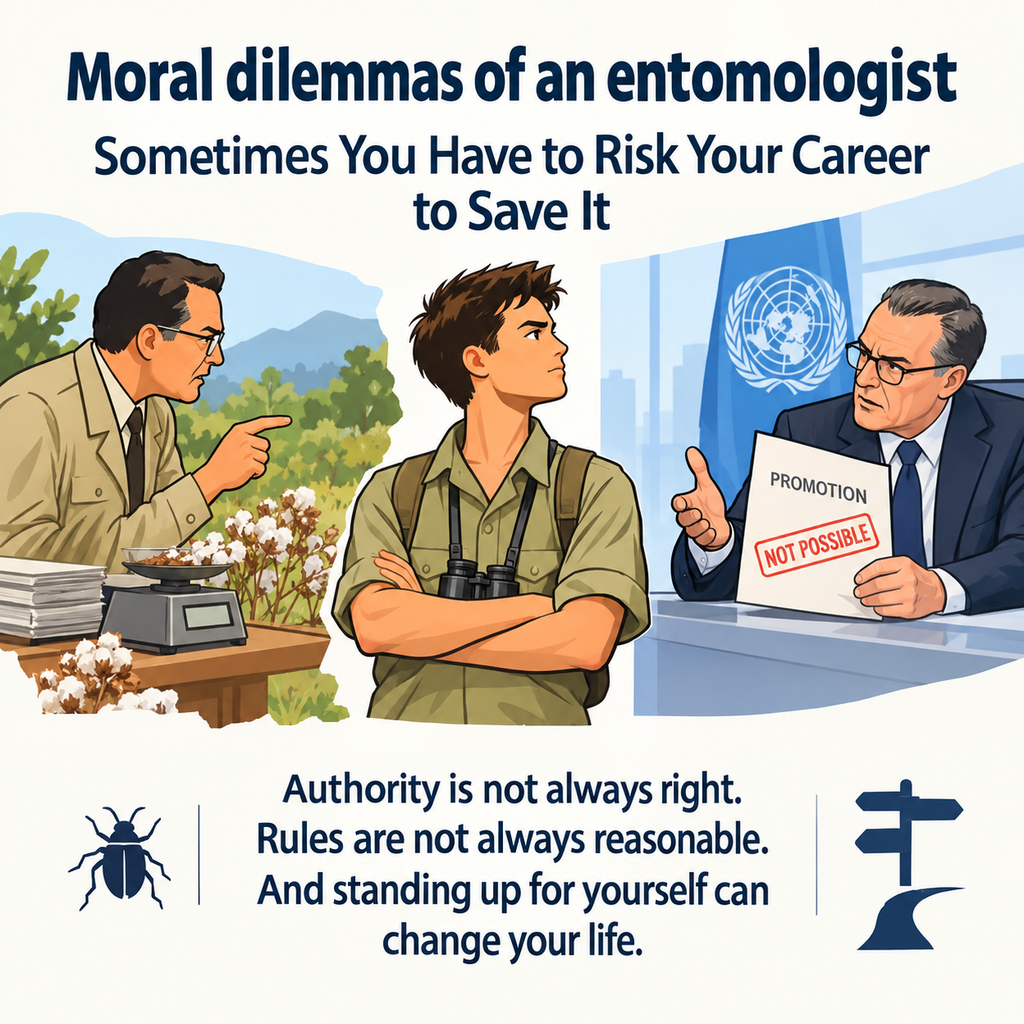
In 1974, fresh out of university and eager to make a difference, I received an offer that would shape the rest of my career. The Directorate-General for Development Cooperation (DGIS) of the Dutch Ministry of Foreign Affairs had selected me as an Associate Expert for an FAO/UNDP project in Nicaragua.
The assignment sounded exciting. The project had begun as a program to help cotton farmers manage devastating insect pests but had recently expanded to include maize, sorghum, and beans. My role would be to develop Integrated Pest Management (IPM) strategies for maize and sorghum—an area I had already started preparing for with great enthusiasm.
But there was one question I could not ignore.
Nicaragua was ruled by the Somoza dictatorship, a regime notorious for repression and corruption. Was it morally right to work in such a country?
I wrestled with that question for days before deciding to seek advice from someone I deeply respected: Professor Gerrit Jan Huizer of the Catholic University Nijmegen (now Radboud University). He had spent decades working with peasant communities across Latin America and Asia and knew the realities of development work better than almost anyone. I met him briefly at a symposium on land reform in Wageningen, and I knew he had once begun his own international career as an associate expert in Central America.
When I called him and explained my doubts, he didn’t hesitate.
“Go,” he said. “It will be an excellent learning experience.”
His certainty convinced me. Sometimes a single sentence from someone you trust is enough to change your life.
Before leaving for Nicaragua, I contacted the Dutch FAO expert already working on the project. We discussed how the work would be divided. He would focus on beans, the project leader would oversee cotton, and I would take responsibility for maize and sorghum. I immersed myself in scientific papers, photocopying articles and studying everything I could find on IPM for these crops. I arrived in Nicaragua eager to begin.
Instead, I received an unexpected surprise.
The project leader informed me that, for the next two months, I would be weighing dried pieces of cotton plants. He was developing a growth model for cotton and needed someone to do the measurements.
I was stunned.
This was not why I had come halfway around the world. I had been recruited for independent work on maize and sorghum, not to spend weeks acting as a laboratory assistant.
That night I hardly slept. I kept turning the problem over in my mind. Should I simply accept the situation? After all, I was the youngest member of the team. Or should I stand up for what I believed was right?
By morning I had made my decision.
The Dutch senior expert assured me that he would support me if things went badly. Even so, walking into the project leader’s office felt like carrying lead in my shoes.
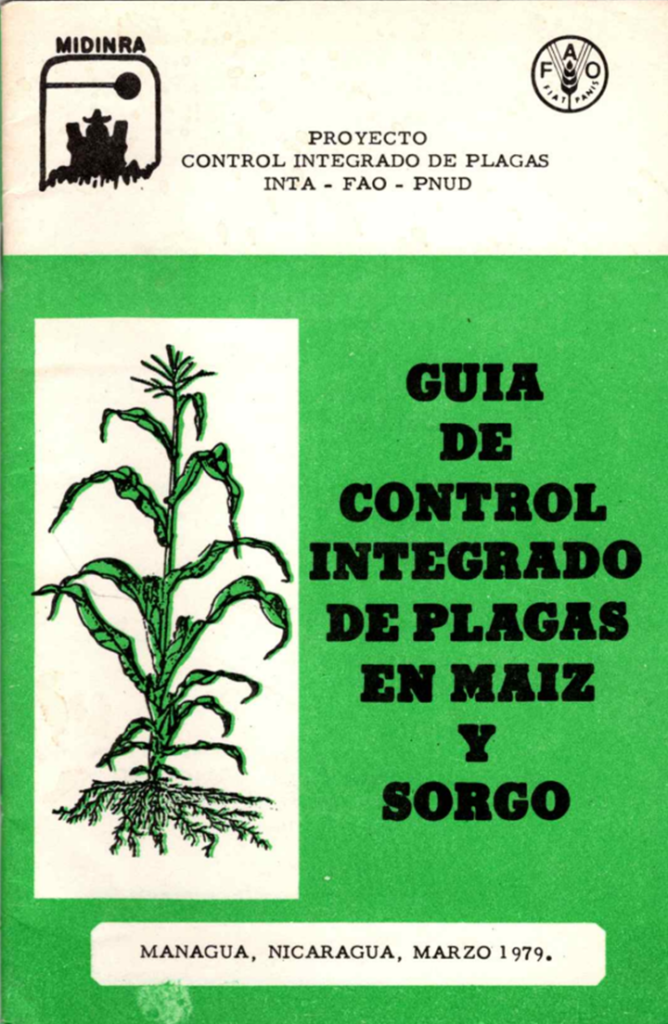
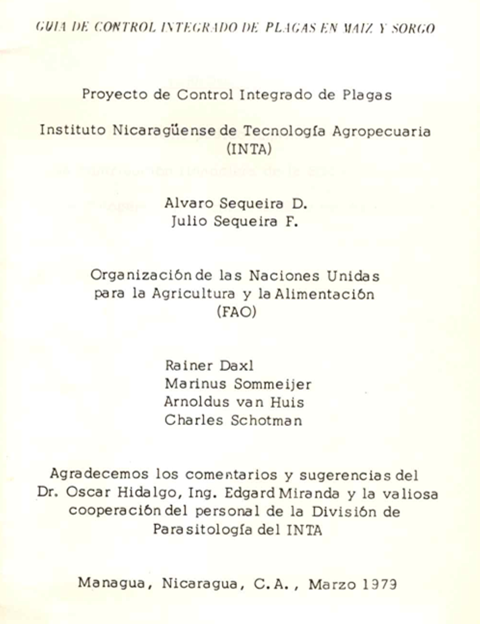
I explained calmly that weighing cotton plants was not the purpose of the Associate Expert programme. If necessary, I said, I would have to report the situation to the Dutch Ministry. I reminded him that I thought that I was recruited specifically to develop IPM for maize and sorghum and had prepared extensively for that assignment (Fig. M1).
Then I waited.
To my enormous relief, he agreed immediately.
Just like that, the problem disappeared.
The weight I had carried into his office seemed to vanish from my shoulders. From that day onward, I devoted myself wholeheartedly to the work, and the following years became some of the most rewarding of my professional life.
Challenging Bureaucracy
When Rinus Sommeijer left Nicaragua in 1976, I faced a choice. As an Associate Expert, I held a United Nations P-1 position. I could either stay and take over his responsibilities or accept a different assignment elsewhere.
For me, the answer was obvious. By then I was already functioning independently, with full responsibility for IPM in maize and sorghum. If I stayed, I wanted to continue not as an Associate Expert but as a fully appointed FAO expert.
There was just one problem.
UN rules did not allow a direct promotion from a P-1 to a P-3 position.
The bureaucracy said it could not be done.
I replied that, in that case, I would rather leave and accept another assignment elsewhere.
Apparently, FAO wanted me to stay. After considerable discussion behind the scenes, a solution was found. I was promoted first to P-2 for two months and then to P-3, satisfying the administrative requirements while allowing me to continue the work.
The episode became something of a legend inside FAO. Years later, when I visited headquarters in Rome, people would ask, smiling, “Are you the person who…?” They already knew the story.
Looking back, those two moments taught me lessons that stayed with me throughout my career.
The first taught me not to accept work that ignored the purpose of my appointment or wasted the opportunity I had been given. The second taught me not to let bureaucracy stand in the way of fairness or common sense.
Neither confrontation came easily. In both cases I was nervous. In both cases I risked hearing “no.”
But I also learned something invaluable: if you have prepared well, have done your job, and know your case is just, do not be afraid to speak up.
Standing your ground is rarely comfortable.
Sometimes, however, it changes the course of your life.