
CONTENTS
I thought I knew grasshoppers. The women of Niger knew better
Introduction
The travels produced many remarkable stories. But one of the most important came right at the beginning, in Niger. It was a conversation that would eventually change the direction of my career.
Niger was a natural place for me to start. From 1982 to 1985, I had lived and worked there, coordinating a large training programme in crop protection for countries across the Sahel. Returning ten years later meant that I still knew people in the country, including staff at the Plant Protection Service.
I also had access to students from different Sahelian countries. Because they had agricultural backgrounds, it was relatively easy to talk with them about insects. Or so I thought.
Then, during one interview at the Plant Protection Service, someone casually told me something that stopped me in my tracks.
“Women farmers earn more money by selling grasshoppers collected from their millet fields than by selling the millet itself.”
I was flabbergasted.
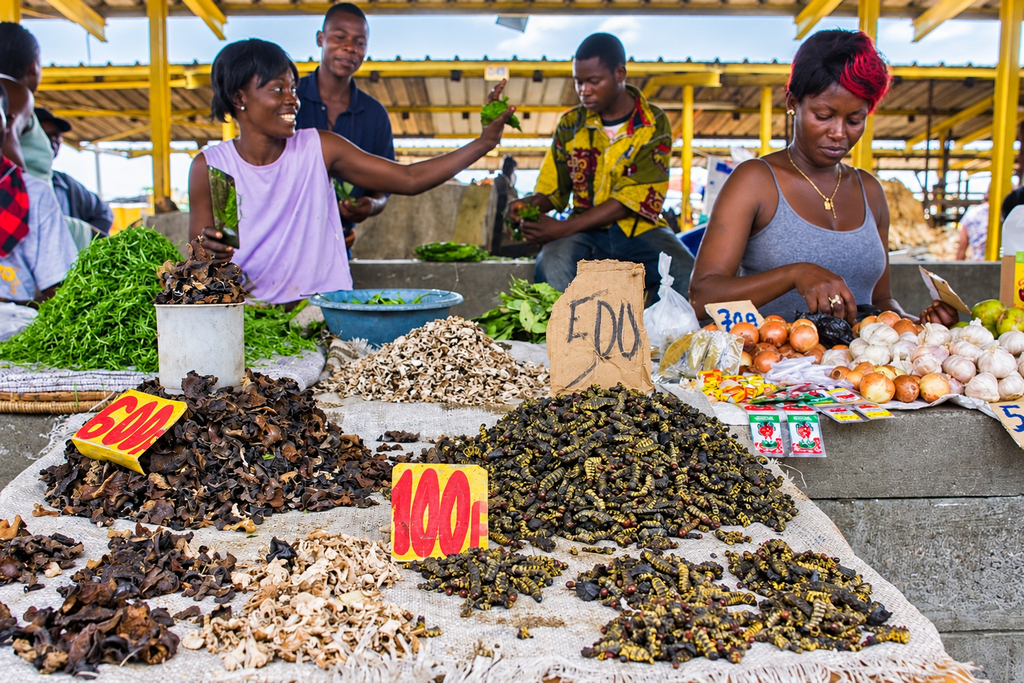
I had lived and worked in Niger for three years. My profession was entomology. I had been involved in crop protection. Grasshoppers were hardly unfamiliar to me.
And yet I had never heard about this.
How could I have missed something so important?
The blind spot
At first, I felt embarrassed. But gradually I began to understand that the problem went much deeper than simply overlooking a fact.
Eating insects was often regarded in the West as primitive or backward. Africans were well aware of that attitude. Why would people voluntarily discuss such practices with a Western scientist if they expected to be ridiculed or looked down upon?
And there was another problem: I had never seriously asked.
That realization taught me an important lesson. You can spend years in another country, work closely with local people, and even consider yourself knowledgeable about their lives—and still fail to see what is right in front of you. Your own cultural assumptions can determine which questions you ask and, therefore, which answers you receive.
It made me much more cautious about assuming that I understood another culture.
A new question in every interview
From then on, I deliberately asked people about eating insects. More importantly, I showed that I was genuinely interested in their answers.
The effect was remarkable.
In many of my subsequent interviews across Africa, edible insects occupied as much as half of the conversation. People told me which species they collected, when and where they found them, how they prepared them, who collected them, how they were sold, and what they meant within local food traditions.
I accumulated a wealth of information, much of which I later shared in scientific publications.
I was fortunate that the Niger conversation happened at the very beginning of my sabbatical. One unexpected remark had given my entire journey a much clearer focus.
The women who knew their grasshoppers
Another experience in Niger reinforced the lesson.
Sometime between my two sabbaticals, a student went into villages carrying a large display box filled with pinned specimens of different grasshopper species. He showed them to men and women and asked whether they recognized them.
They certainly did. They supplied local names for many of the species.
But there was a striking difference.
The women could distinguish more than twenty species. The men could identify only about half as many.
Once we thought about it, the explanation seemed obvious. It was mainly the women who collected the grasshoppers, sold them in the markets, and prepared them for eating. Their knowledge came from daily experience.
It was another reminder that when researchers enter a community looking for knowledge, they need to think carefully about whom they ask. The person with the greatest expertise is not necessarily the person with the highest status.
From fighting insects to eating them
That first conversation in Niger stayed with me.
After 2005, edible insects became the main focus of my professional work. In a sense, my career took an unexpected turn: I moved from studying how to control insects as pests to studying how insects could be used as food.
Sometimes, of course, the two approaches come together.
A grasshopper eating a farmer’s crop may be considered a pest. But if that same grasshopper can be collected, eaten, and sold at the market, it can also become a valuable resource.
And that brings me back to the women in Niger.
They were doing something that my training in crop protection had not taught me to see. Where I had been trained to see a pest attacking millet, they could see both a pest and a source of food and income.
It took one conversation for me to recognize that.
And, in the end, that conversation helped determine the direction of the rest of my career.
If you would like to read more about my work with edible insects, click here.
What do a spider, an antlion and football have in common?
The Secret Behind Cameroon’s Football Success
In September 2000, I was in Yaoundé, the capital of Cameroon. One day, I decided to take a walk through the city. It did not take me long to realize that something important was happening. Everywhere I went, people were gathered around television sets or listening intently to radios.
Cameroon was playing Brazil—and during my walk, Cameroon won 2–1.
It was as if the city exploded.
People poured into the streets, cheering, shouting, and dancing. Complete strangers came up to me, patted me on the back, and danced around me. The excitement was overwhelming. I must admit that I did not feel entirely at ease in the middle of all this exuberance, and I was rather relieved when I finally reached the peace and quiet of my hotel room.
But there was another reason why Cameroon’s football success fascinated me.
A few days earlier, I had been in Dschang, a city about 350 kilometres northwest of Yaoundé, interviewing people at the university about cultural traditions and beliefs involving insects. During these conversations, I discovered that insects—and other small creatures—could even have a role in football.
Or, more precisely, in helping your team win.
I was told about two particularly fascinating practices.
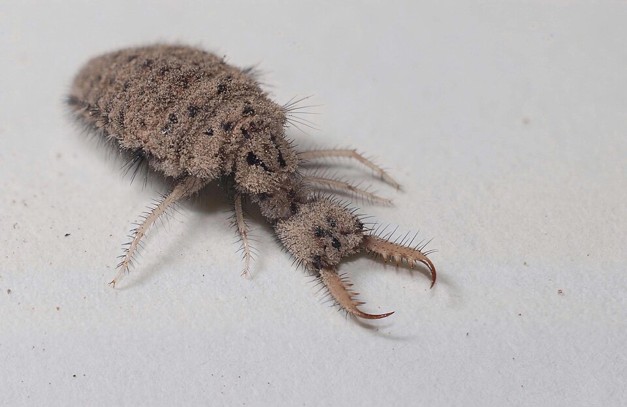
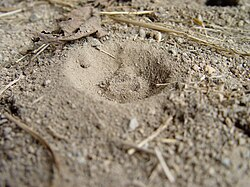
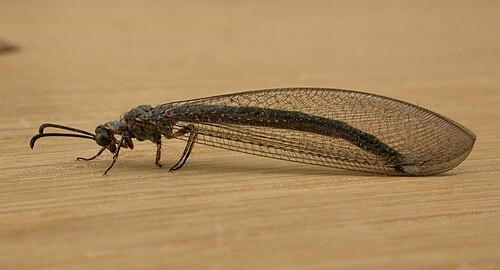
Whether this ever helped Cameroon win a football match is, of course, another question.
What struck me most during these interviews was the secrecy surrounding such practices. I always interviewed people individually, never in groups. Several informants told me that what they were revealing was a secret and that they were not really supposed to tell me.
Yet the underlying idea is perhaps not as strange as it may first appear.
Superstitions about good and bad luck exist all over the world. In Europe, almost everyone knows that Friday the 13th is supposed to be unlucky, that you should not walk under a ladder, or that a black cat crossing your path may be a bad omen. Athletes themselves are famous for their rituals: a particular pair of socks, a lucky shirt, a certain routine before an important match.
We may smile at such beliefs, but they reveal something deeply human. When the outcome of an important event is uncertain, we like to feel that there is something—anything—we can do to influence it.
But after experiencing the celebrations in Yaoundé, I understood one thing very clearly: when football matters that much, people are willing to call on every possible source of help—even insects.