Below I explain how the studies were conducted, but first I give a number of examples from the studies (to be downloaded under publications)
Examples
A number of examples from the studies dealing with termites, caterpillars, beetles, wasps and bees and grasshopper and locusts
Termites
Termites and mining Termite mounds are sometimes used to search for metals such as gold, zinc, and uranium. Termites can dig very deep underground, usually up to 10 meters and sometimes even 70 meters. They do this to avoid drought, to collect clay for building their nests, or to find moisture. While digging, they bring soil and minerals from deep underground to the surface. Termites do not keep metals in their bodies; instead, they remove extra metals and leave them in the mound. Mining companies can study these deposits in termite mounds to find places where valuable minerals may exist underground. This method is cheaper and less damaging than drilling.
Termites as oracles The Azande people of Sudan use termites to help answer questions. They place two sticks from different trees (called dakpa and kpoyo) into a termite mound. In the evening they ask a question. The next day they check which stick the termites have eaten more. The answer to the question depends on which stick was eaten.
Termites in poems about hard work
If anything inspires, Termites inspire even a fool. If people work hard, Termites work even harder. Even without leaders watching them. Although they are very small, They are wiser than the giant elephant.
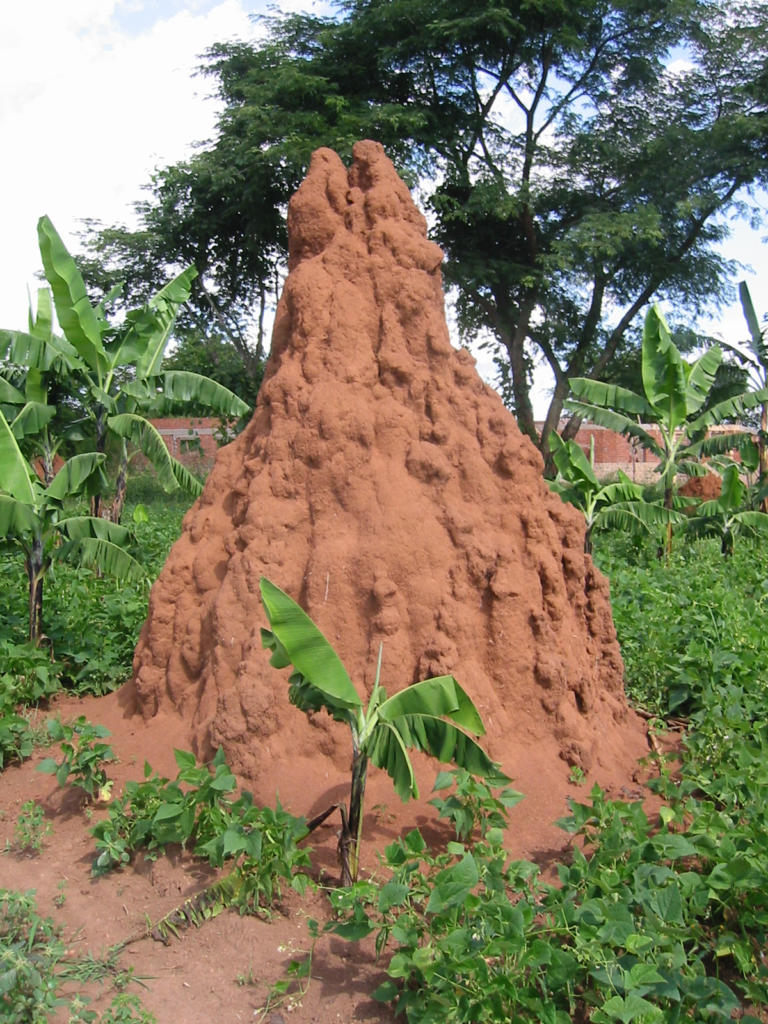
Fig E1. A termite hill
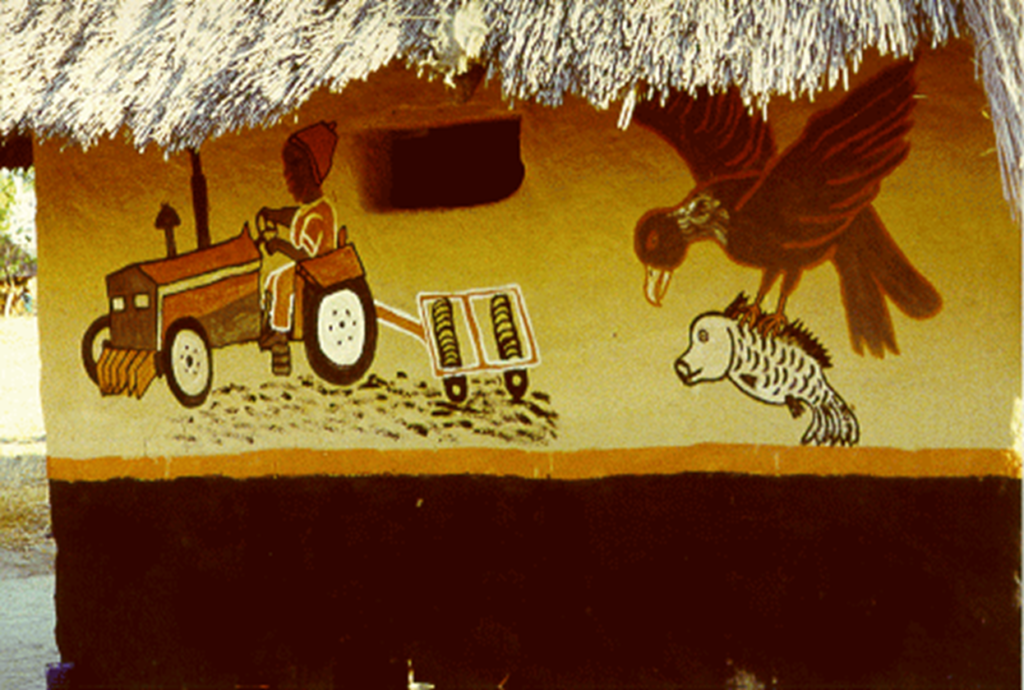
Fig. E2. A hut in Zambia with drawing using termite soil as paint. As termites dig deep they bring different colours of soil above ground

Butterflies and moths
Names related to religion In the Sahel region, butterflies and moths are sometimes named after religious leaders. This is because their wings move up and down like a Muslim praying. Their names can also mean “unstable,” referring to their irregular flying movements.
Caterpillars as food In Africa, people eat nearly 100 species of caterpillars. One of the most popular in southern Africa is the mopane caterpillar (Gonimbrasia belina). It is very nutritious and an important food source.
Silkworm pupae as a delicacy In the central highlands of Madagascar, people eat the pupae of a wild silkworm (Borocera madagascariensis). They fry them in oil and consider them a delicacy. The silk produced by this insect is called landibe. Because harvesting it is difficult and the amount of silk is small, it is very expensive. In the past, only royalty wore clothing made from this silk. Important people who died were wrapped in a special red cloth called lamba mena made from this silk.
The African armyworm The caterpillar of the moth Spodoptera exempta is called the African armyworm. Many people believe that large numbers of these insects are connected with rain and good harvests. Some even believe the worms fall from the sky with the rain, which is why they are sometimes called “mystery worms.”
A song about a caterpillar in Congo In the Democratic Republic of Congo there is a song about a very tasty caterpillar, probably Imbrasia epimethea. The caterpillars come down from trees around 4:00 pm, likely to pupate in the soil. Women collect them for food and sometimes return to the village late at night.
Part of the song says:
Miliem caterpillar, come down quickly. A woman is in labor. Come down quickly so she can return to the village to give birth. If you do not come down, She will give birth here in the forest.
Butterfy masks
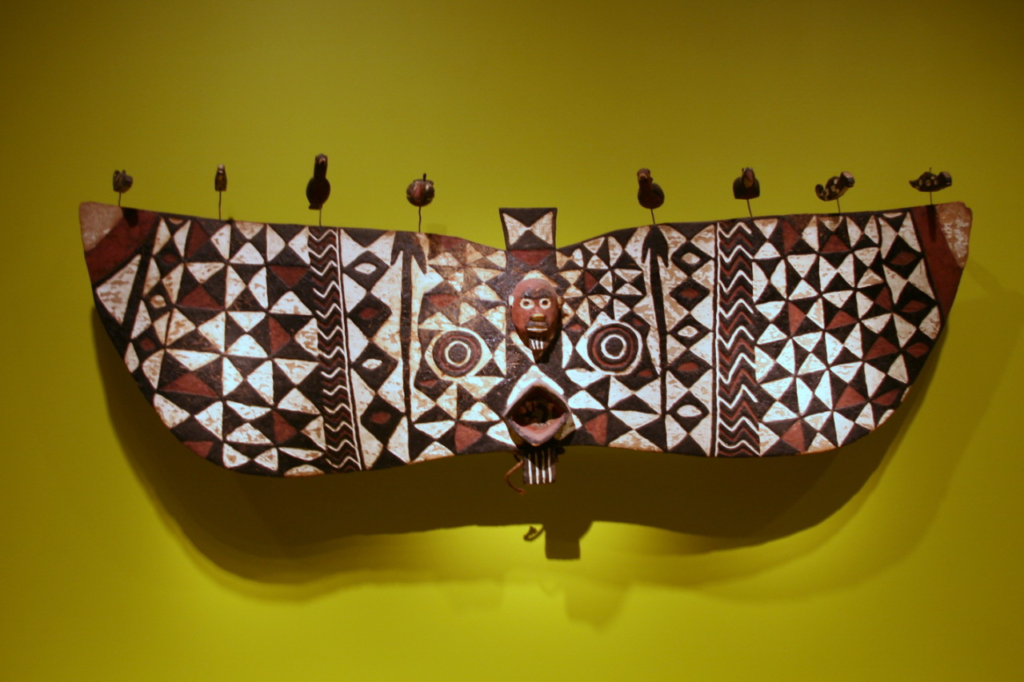
Butterfly masks, called Yehoti in Boni (Department in the Province of Tuy in Burkina Faso), have eight enormous target patterns spread across their wings. The elders of the Kambi clan in Dossi claim that the plank masks represent flying spirits and are associated with water. These spirits can take the form of insects that mass around muddy pools after early rains.
Fig. E3. Elder Merina woman with a white lamba akotofahana in Madagascar.
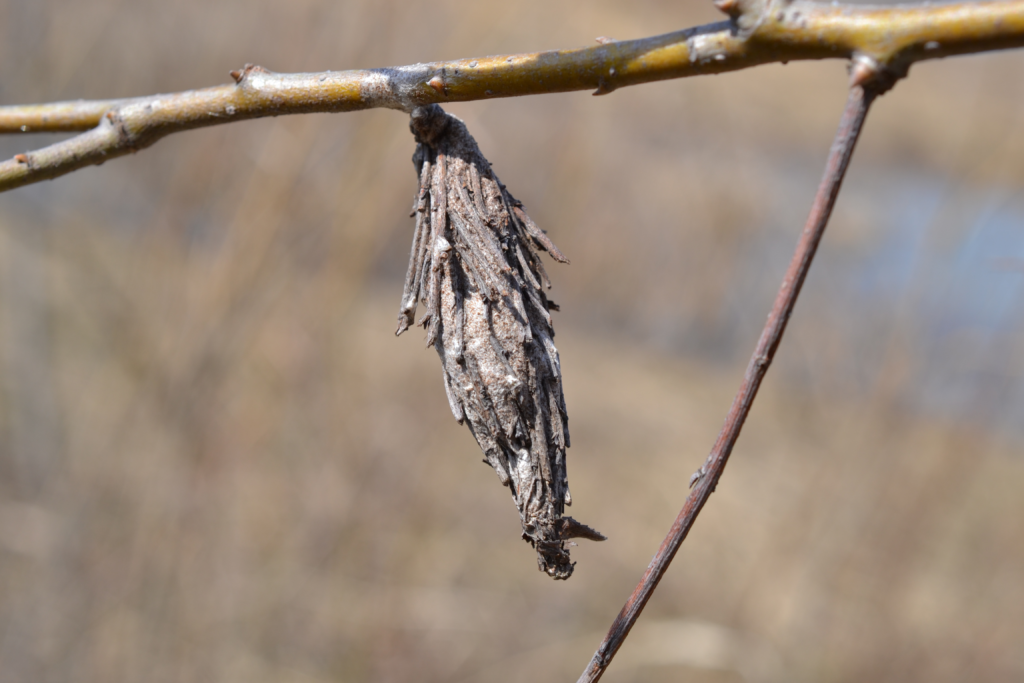
Fig. E4. A typical bagworm. The larvae collect sticks to protect themselves. Almost all my informants from the different ethnic groups in Cameroon indicated that the number of sticks covering the insect represents the age of the animal.
Fig. E5. Butterfly mask of the Nuna peoples, Burkina Faso .
Ants and wasps
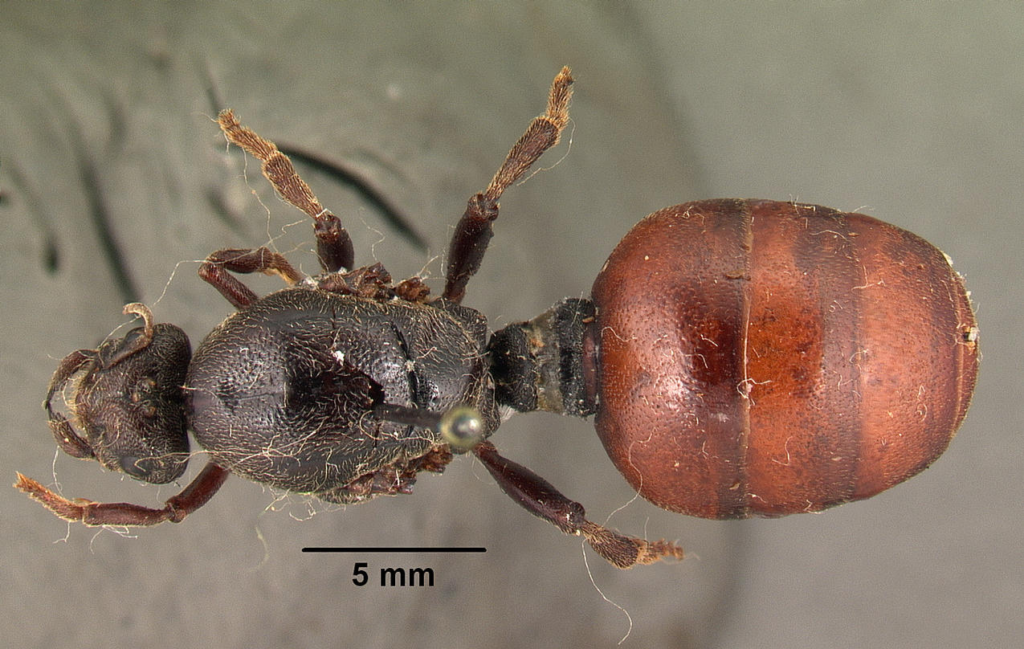
Ant queens as food The winged queens of the thief ant (Carebara vidua) are collected during their mating flight, when many ants leave their nests at the same time. These nests are often hidden in termite mounds. People usually eat only the abdomen, either raw or roasted. The queens can be over 2 cm long, while the workers are very tiny (less than 2 mm). These ants often live near termites and prey on them.
Bee stings as medicine In Sudan and other parts of Africa, bee stings are sometimes used as a treatment for rheumatic arthritis.
Honey as medicine Honey is widely used as medicine across sub-Saharan Africa. People believe it can treat many illnesses such as cough, flu, fever, skin problems, dysentery, and high blood pressure. It is also commonly used to treat burns, which happen often because many households cook with open fires. Because of these uses, many families keep a pot of honey at home.
Stories about the wasp’s thin waist
There are many traditional stories explaining why wasps have a thin waist:
In one story, a wasp stood with its hands on its hips watching people on the road for so long that its body became permanently narrow in the middle.
In another story, God was giving souls to living beings and asked everyone to close their eyes. The wasp did not obey, so God tied a rope around its waist as punishment.
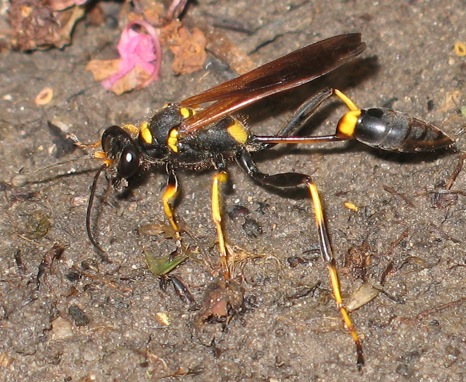
In reality, wasps reproduce in a different way: the wasp paralyzes a caterpillar, brings it to the nest, lays an egg on it, and seals the nest. The wasp larva then eats the caterpillar from the inside before emerging as an adult wasp.
Fig. E6. A wasp, a mud dauber, Sceliphron sp. (Hymenoptera: Specidae) with the narrow waste.
Fig. E7. winged queens of the thief ant with the large edible abdomen.
Beetles
Beetles as food In Africa people eat both beetle larvae and adult beetles. Before eating them, they remove the hard wing covers. One species eaten in southern Africa is Sternocera orissa.
A cultural practice In some countries such as Cameroon, Kenya, Rwanda, Uganda, and Zimbabwe, adolescent girls collect water beetles and let them bite their nipples. It is believed this helps stimulate breast growth.
Children playing with beetles Children often play with beetles. One game involves tying a string to a beetle and letting it fly in circles. Children also try to catch fireflies. Another game involves tiger beetle larvae that live in deep vertical holes in the ground. Children place a piece of grass in the hole, and when the larva grabs it, they quickly pull it out.
A story about dung beetles In Sudan there is a story about why dung beetles roll dung. The story says the dung beetle fell in love with the moon and wanted to marry her. The moon said she would only come down if the beetle removed all the dung from the earth. That is why the beetle keeps cleaning up dung.
Jewel beetles for jewelry Jewel beetles are famous for their shiny wing covers. In Zambia people make necklaces by threading these colorful wing covers onto strings.
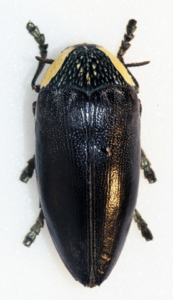
Fig. E9. The jewel beetle Sternocera orissa (Buprestidae) is eaten in southern Africa, but also for making jewelry.
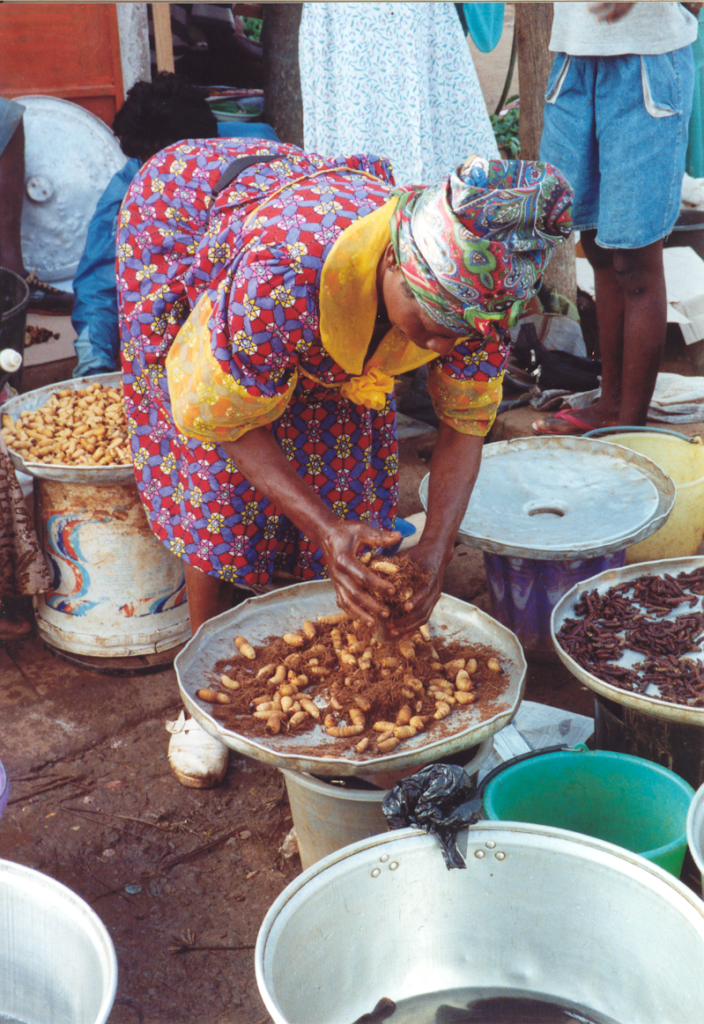
Fig. E8. Selling the larvae of the African palm weevil Rhynchophorus phoenicis on the local market in Yaoundé, Cameroon.
In Africa the larvae of the palm weevil, Rhynchophorus phoenicis is consumed. The insect is mostly collected from the oil palm and Raphia spp. After felling the palm, you must wait several days before you can harvest the larvae. The decision to harvest depends on the sound the larvae make in the trunk.
Locust and grasshoppers
Local names
In southern Africa, the cricket Gryllus bimaculatus is called the “talkative wife cricket” because of its constant chirping. In the Democratic Republic of Congo, another edible insect (Brachytrupes membranaceus) is called the “tube of fat” because of its large abdomen. In Nigeria the contents of its stomach are sometimes rubbed on infected feet to help healing. In Benin it is also used as medicine for children who have trouble speaking and as a treatment for snake and scorpion bites.
Grasshoppers as food In Niger, women can usually name more species of grasshoppers than men because they collect and prepare them as food. Many species of grasshoppers and locusts are eaten across sub-Saharan Africa—about 126 species in total. Because people eat them, farmers often do not use pesticides against them.
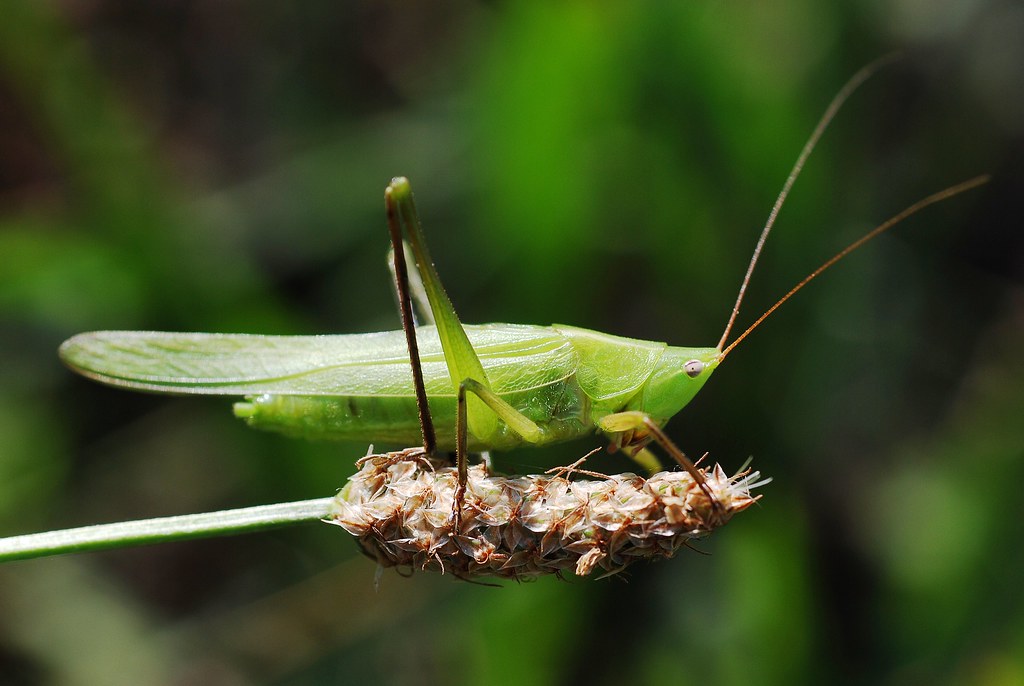
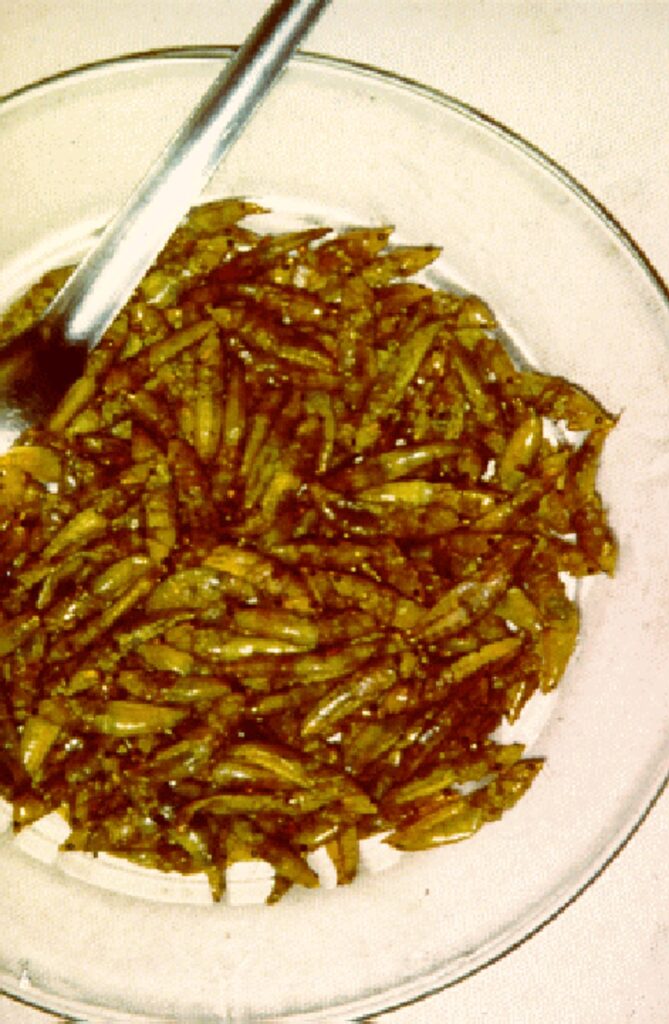
Nsenene in Uganda The grasshopper Ruspolia differens is a popular delicacy in East Africa. In Uganda it is called nsenene. It appears in large numbers in November, which is why the month is sometimes called musenene. Children often collect them at night under streetlights because the insects are attracted to the light. Sometimes accidents happen because children focus so much on catching them that they do not notice cars.
A proverb from Madagascar There is a proverb in Madagascar: “You cannot catch egg-laying grasshoppers and sleep at the same time.” This means you must wake up early and work hard, because grasshoppers are easiest to catch in the cold early morning.
Fig. E10. Ruspolia differens in Uganda. The adult grasshopper, called nsenene.
Figure E11. the nsenene Dish prepared by my hostess.
Methodology
How was the study conducted
This study collected information from books and from personal interviews. The interviews took place in Africa in 1995 and 2000. The focus was on how people in sub-Saharan Africa use insects and other arthropods in daily life. This included their use as food and medicine, but also their role in religion, witchcraft, art, music, dance, children’s games, stories, and proverbs.
Even though the interviews were done about 20 years ago, the information is still important today. In fact, it might be harder to collect now. Rapid urbanization and social change mean that traditional knowledge is disappearing. Much of this knowledge was passed down orally from older people, and younger generations may no longer learn it.
Who Was Interviewed?
A total of 304 people from 27 countries in sub-Saharan Africa were interviewed. These people came from 121 different ethnic groups. Most of the interviewees were scientists or technicians trained in the study of insects (entomology). They were found at universities, research institutes, museums, and agricultural organizations. Most were men, reflecting the staff makeup of those institutions. A few interviews were conducted in villages with people who did not have scientific training, although this was sometimes difficult because of language barriers. Twenty-two participants were considered “resource persons.” These were experts such as professors, termite specialists, shamans, priests, or museum directors.
How the Interviews Were Done
The interviews were informal and face-to-face. They followed a semi-structured format, meaning the researcher used a list of themes (such as insects as food, medicine, toys, signs, witchcraft, poison, proverbs, and insect products) but allowed open discussion. Participation was voluntary, and interviewees gave informed consent. Their identities were kept confidential.
The information was analyzed using qualitative methods. This means the researcher looked for patterns and themes in the stories and explanations people gave. Information about a country or tribe was only reported if it was confirmed by more than one person or supported by written sources.
The researcher also consulted libraries in London, Paris, Leiden (Netherlands), and in some African countries. Most of the written material used was anthropological (about culture and society).
Results
In the publication section you find articles dealing with termites, caterpillars, beetles, ants, bees and wasps and grasshoppers and locusts.
Why Are Similar Beliefs Found Across Africa?
The study found that many beliefs and stories about insects are shared across sub-Saharan Africa. This is surprising because Africa has more than 2,000 ethno-linguistic groups. There are three possible explanations:
Cultural sharing (diffusion): Neighbouring groups borrowed ideas from each other.
Local adaptation: Different groups developed similar ideas because they lived in similar environments.
Migration: Groups of people moved to new areas and brought their beliefs with them.
All three explanations likely played a role.
Why Is Indigenous Knowledge Disappearing?
The study warns that traditional knowledge is being lost. Several reasons are suggested:
Western education systems often ignore or undervalue African indigenous knowledge.
Colonialism and post-colonial systems weakened traditional social structures.
Globalization focuses more on economic growth than on cultural and spiritual values.
Breakdown of traditional families.
Migration and displacement.
Influence of social media.
Because of this, the author recommends better documentation and research of ethno-entomological knowledge (knowledge about insects in culture) in sub-Saharan Africa before it disappears completely.
Publications
Refereed
Van Huis, A., 2022. Cultural significance of locusts, grasshoppers, and crickets in sub-Saharan Africa. Journal of Ethnobiology and Ethnomedicine, 18:24. https://doi.org/10.1186/s13002-022-00524-w
Van Huis, A., 2021. Cultural aspects of ants, bees and wasps and their products in sub-Saharan Africa. International Journal of Tropical Insect Science. https://doi.org/10.1007/s42690-020-00410-6
van Huis, A., 2019. Cultural significance of Lepidoptera in sub-Saharan Africa. Journal of Ethnobiology and Ethnomedicine 15: 26. https://doi.org//10.1186/s13002-019-0306-3.
Van Huis, A., 2017. Cultural significance of termites in sub-Saharan Africa. Journal of Ethnobiology and Ethnomedicine, 13:8. https://doi.org/10.1186/s13002-017-0137-z
Van Huis, A., 2003. Medical and stimulating properties ascribed to arthropods and their products in sub-Saharan Africa. In: “Insects in oral literature and traditions” (Eds: Élisabeth Motte-Florac and Jacqueline M.C. Thomas), pp. 367-382. Ethnosciences: 11. Société d’études linguistiques et anthropologiques de France (Series): 407. Peeters, Paris. 633 pp.
Van Huis, A, 1996. The traditional use of arthropods in sub-Saharan Africa. Proc. Exper. & Applic. Entomol., N.E.V. Amsterdam, 7: 3-20.
Non-refereed
Van Huis, A, 2006. Insecten in de Afrikaanse cultuur. In Muggenzifters en Mierenneukers: insecten onder de loep genomen (Eds: Ties Huigens, Peter de Jong), pp. 264-269. Laboratorium voor Entomologie. Wageningen Universiteit.
Van Huis, A, 2003. Heilzame werking toegedacht aan insecten en hun producten. Abstracts, p. 29-30. Negende WCS Congres “Van zwaluwstaart naar apenstaart”, 4-5 November 2003 in Utrecht, the Netherlands. Woundcare Consultant Society, Utrecht.85 pp.
Van Huis, A, 2002. De heilzame werking van geleedpotigen en hun producten in Afrika ten zuiden van de Sahara. Entomologische berichten, 62(1): 8-13.
Van Huis, A, 1999. Insecten als medicijn (Insects as medicine). Tijdschrift voor Integrale Geneeskunde, 15(3): 102-108.
Van Huis, A, 1999. Insects as medicine. In: Abstracts (Eds.: D. Giga and M.A. Bob), p. 38. Integrated Pest and Vector Management and Sustainable Development in Africa. Joint Congress of the African Association of Insect Scientists (13th Congress) and the Entomological Society of Burkina Faso, 19-23 July 1999.